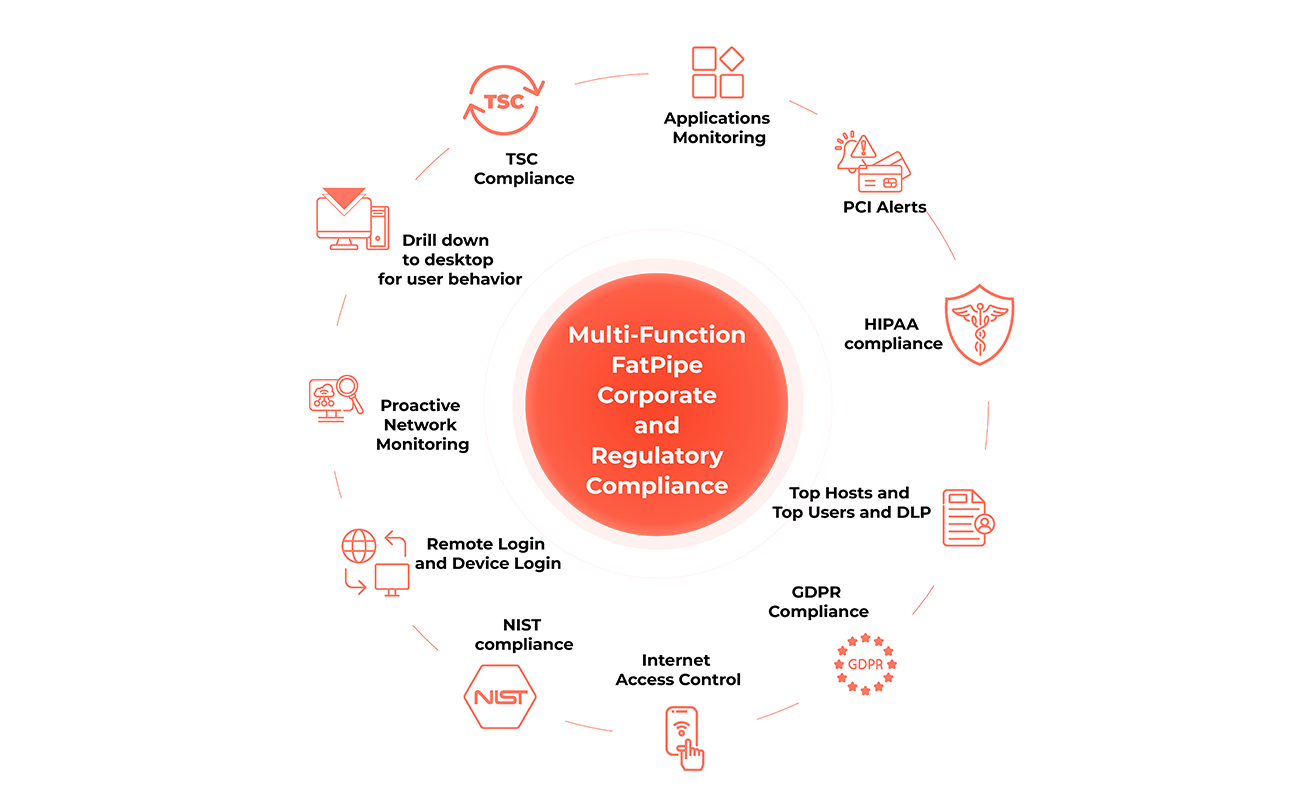
FatPipe monitors internal compliance to ensure that all data adhere to compliance requirements. Organizations can assess their risk level and will be in a position to comply with major security frameworks including NIST, HIPAA, PCI-DSS, GDPR, and TSC. Continuous monitoring of systems and activities and compliance reporting is performed to find out potential compliance deviations
FatPipe provides continuous monitoring to organizations by tracking compliance in real-time. With FatPipe cybersecurity and SIEM compliance monitoring, organizations can identify compliance gaps easily and begin corrective actions.
FatPipe helps organizations adhere to the fundamental guidelines of data protection and privacy through its compliance reporting system. FatPipe’s compliance reporting helps organizations achieve regulatory compliance and also foster customer trust and confidence.
Yes. At specific capability levels, Total Security 360 includes integrated SIEM features that provide internal and external threat monitoring along with compliance reporting.
All relevant security events are consolidated into a single dashboard, allowing administrators to monitor policy violations, analyze log patterns, and evaluate regulatory exposure in real time.
Yes. FatPipe’s SIEM provides structured compliance reporting aligned with major frameworks such as NIST, HIPAA, PCI-DSS, GDPR, and TSC.
In addition to real-time monitoring and anomaly detection, the system generates audit-ready reports and maintains historical logs to support internal assessments and external regulatory reviews.
FatPipe’s SIEM allows organizations to generate framework-specific reports aligned with standards such as NIST, HIPAA, and PCI-DSS.
Reports can be filtered by user group, username, IP address, or event type, helping security teams conduct targeted analysis. Administrators can activate full compliance frameworks, such as MITRE ATT&CK, or choose specific categories that match their reporting needs.
With the growing volume of security alerts, prioritization is critical. FatPipe’s SIEM uses a risk-based alerting model that highlights threats posing the greatest risk to the organization.
Administrators can set response time thresholds by customer or by security tool to ensure timely action. This model unifies Managed WAN Edge and Managed Security operations, aligning monitoring and enforcement across the entire network.